2063Now | September 2026 – Sikama Makany
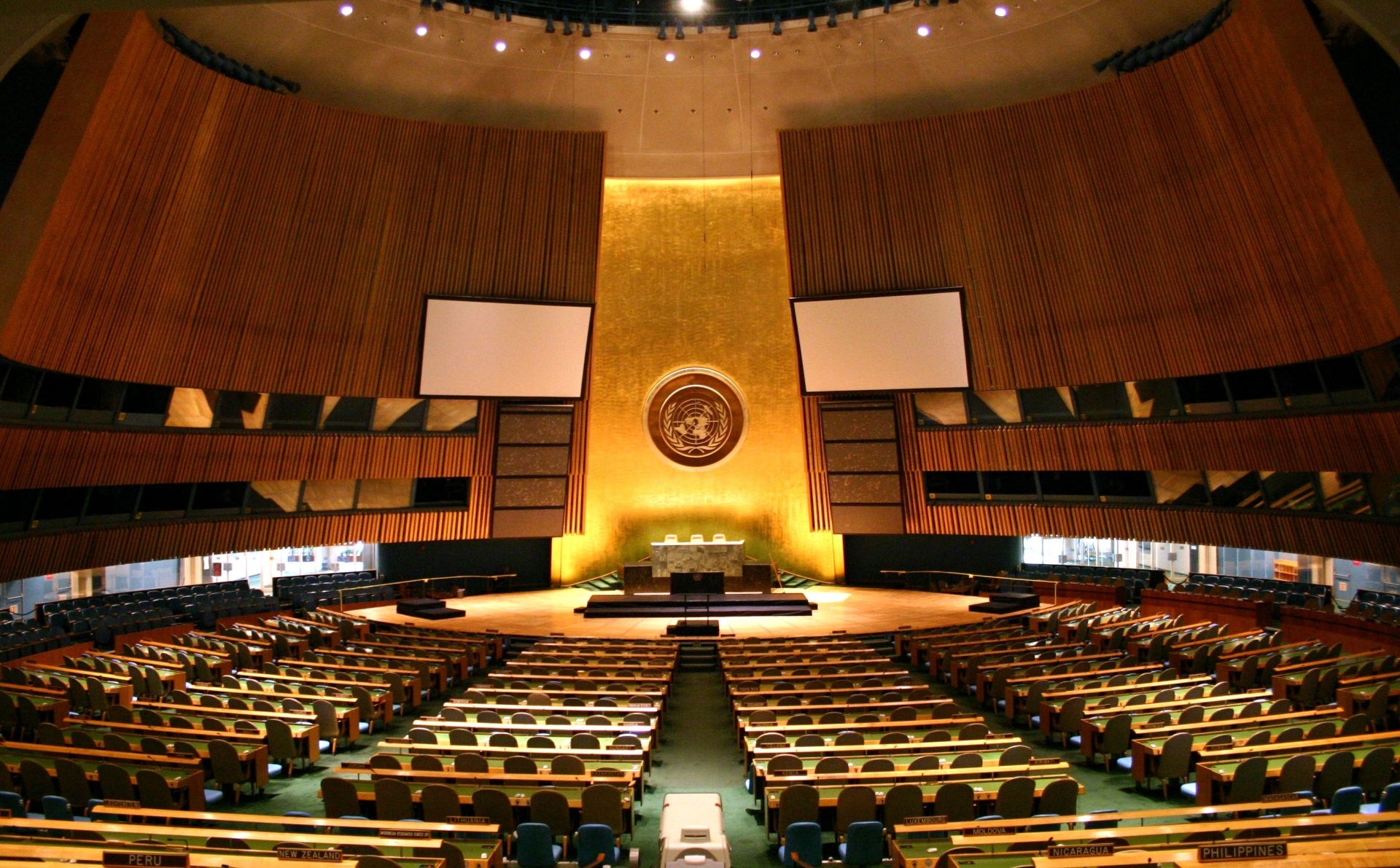
September often marks the start of the school year, whether for the millions of students around the world or for the heads of state and government who will travel to New York in a few days for the81st United Nations General Assembly to present their views on the major issues of our time. Let’s take this analogy a step further for the sake of this editorial.
A diverse ruling class that is out of touch with the African people
If Africa were a classroom and the heads of state were the students, it would be interesting to see just how many disparities there would be in that classroom. Whether in terms of backgrounds, skills, or ambitions, the “class of African leaders” has never been more diverse in its history.
The average age of heads of state is 66: the youngest, Ibrahim Traoré (38, Burkina Faso), stands alongside the oldest, Cameroon’s Paul Biya (93). The average time in office is 11 years. The contrast is striking between Romuald Wadagni of Benin, who was elected just a few months ago, and Teodoro Obiang Nguema of Equatorial Guinea, who has been leading his country for 47 years since 1979. In terms of gender parity, among a group of 54 African leaders, there are reportedly only two women, compared to 52 men, with the sole exceptions being Netumbo Nandi-Ndaitwah of Namibia and Samia Suluhu Hassan of Tanzania.
Finally, in terms of career paths, if we were to classify African leaders into three categories: (1) military officers or former military officers, (2) technocrats/senior civil servants, and (3) long-time politicians/activists, we would find that more than 40% of current leaders have a military background (23 out of 54) and only 17% come from the second category (9 out of 54).
The profile of African leaders stands in stark contrast to the reality of African populations, which are young (the median age on the continent is 20), dynamic, gender-balanced, increasingly educated, urban, and connected. This may lead people to question the ability of heads of state and government to represent their populations and translate their aspirations into public policy.
Nevertheless, beyond individual considerations and profiles, the most important factor will always be the vision that leaders have for their country and their ability to implement it.
This naturally raises the question of what kind of students the various African leaders hope to become.
Role Models and Comparisons Among African Leaders
“To govern is to choose,” as the famous saying goes, and leaders must choose what kind of students they aspire to become.
Those who, like Ethiopia’s Meles Zenawi, decide to bring together the nation’s leading forces across ethnic divides to plan their country’s economic transformation, or those who exploit communal divisions and violence to secure profits for themselves and their clan.
Those who, like Seretse Khama, view natural resource wealth as a tool for building infrastructure and diversifying the economy, or those who view it as an easy way to generate revenue that can be easily misappropriated.
Those who respect institutions and prepare for their succession, like Nelson Mandela, or accept the results of the ballot box, like Goodluck Jonathan, versus those who think they will rule forever, flout the rule of law, and establish autocracies and presidential monarchies in disguise.
Those who understand, like Thomas Sankara, Ellen Johnson Sirleaf, or Amílcar Cabral, that for a nation to reach its full potential, women must take their place in all spheres of society—particularly in politics and the economy—versus those who advocate for and normalize gender hierarchies and violence against women.
Those who advocate for and work toward intra-African cooperation, such as Julius Nyerere, or those who harbor expansionist ambitions and contribute to the destabilization of their neighbors.
The voice of the people is the voice of God
The strength of our era lies in the fact that it enables all individuals—and leaders themselves—to compare their work with that of their peers through public economic data, international conferences and announcements, and social media. Everyone knows whether their country is performing well or not based on the many available socioeconomic indicators and can assess their government’s political action or inaction.
At a time when countries’ trajectories and their leaders’ performance have never been more visible and comparable, high-achieving students will be recognized even more for their results, and the school will remember them long after they have left. Conversely, students who repeatedly fail to meet expectations, remain inactive, or show contempt for the institution are never safe from expulsion—sometimes a slow and predictable process, other times sudden and dramatic. For while leaders may sometimes delay the moment of reckoning, they cannot indefinitely escape the judgment of those they govern or that of history.
The voice of the people is the voice of God.
A word to the wise.
Leave a comment