2063Now | April 2026
The announcement of the creation of the Ivorian sovereign wealth fund is part of a continental trend that began about fifteen years ago, during which many countries established public investment vehicles to support their economic development, manage revenue from natural resources, and oversee portfolios of public enterprises. Beyond these traditional mandates, how can African sovereign wealth funds go further—drawing on international best practices—to become true catalysts for domestic and foreign investment, as well as instruments serving the strategic influence of states, following the example of funds in the Gulf and Asian countries?
An investment vehicle serving governments
Sovereign wealth funds are investment funds owned by governments. Their functions and mandates vary depending on the structure of a country’s economy and have become more sophisticated with globalization, the resurgence of state capitalism, and the emergence of new asset classes and domestic and international investment strategies. They are distinguished by their long-term investment perspective and their pursuit of risk-adjusted returns across their asset portfolios.
Kuwait is credited with establishing the first sovereign wealth fund in 1953 to manage trade surpluses generated by oil production. Sovereign wealth funds can be categorized in several ways: first, by source of capital (natural resources or trade surpluses, sometimes both); and second, by mandate (stabilization, reserve, strategic, or economic development/diversification) [1]. Nevertheless, the lines are now much more blurred, and in reality there are as many mandates as there are sovereign wealth funds, with each adapting to the specific characteristics of its economy and the strategic visions advocated by its government. According to the Global Sovereign Wealth Funds (Global SWF) Institute, there are more than 100 sovereign wealth funds worldwide, collectively managing nearly $15 trillion in assets under management—representing nearly 14% of global gross domestic product in 2025. Among the 10 largest sovereign wealth funds (ranking below), five are in Asia, four in the Gulf states, and one in Europe, evidence of these regions’ growing role in the global economy and their ability to influence the definition of this century’s key challenges (energy transition, artificial intelligence, value chains) thanks to their strong investment capacity amid weak economic growth in Western countries.

Among the most powerful and innovative sovereign wealth funds, the Government of Singapore Investment Corporation (“GIC,” Singapore) and Mubadala Investment Company (“Mubadala,” United Arab Emirates) are notable examples that combine domestic investments with international leadership.
Established in 1981, GIC is one of Singapore’s three sovereign investment entities responsible for managing the country’s reserves, alongside the Monetary Authority of Singapore (MAS) and Temasek. It manages the majority of the government’s financial assets, with a long-term investment strategy aimed at preserving and growing the international value of the funds entrusted to it. Thanks to first-rate governance and strong in-house capabilities, GIC has, over the years, built a diversified portfolio structured around three major asset classes: equities (51%), bonds (26%), and real assets (23%), distributed globally (49% in the Americas, 24% in Asia-Pacific, 20% in EMEA, 7% globally). The returns generated by GIC over time have enabled the government to fund new long-term investments, particularly in education, infrastructure, research and development, healthcare, and improvements to the physical environment.
Mubadala is a UAE sovereign wealth fund with assets of nearly $385 billion. The fund is distinguished by its leading role in the UAE’s international investment and partnership strategy, as well as by a strong focus on industries critical to the future, such as aerospace, real estate, artificial intelligence and semiconductors, healthcare, and renewable energy, notably through a number of portfolio companies (G42, Masdar, DP World).
African sovereign wealth funds: New catalysts for development
The global rise of sovereign wealth funds has also taken hold on the African continent. The Sovereign Wealth Funds Institute (SWFI) estimates that there are 32 national and subnational sovereign wealth funds in Africa (with $600 billion in assets under management), nearly half of which were established between 2010 and 2022 [2] [3]. Côte d’Ivoire’s announcement is part of this trend, and other sovereign wealth funds are expected to be created soon, such as Guinea’s sovereign wealth fund, which is currently being structured and will be backed by mining revenues from the Simandou project.
The mandates and structures of African sovereign wealth funds have rapidly evolved beyond their traditional roles of stabilization and reserve management, becoming increasingly sophisticated over the years and serving as catalysts for domestic and international capital to address economic development challenges (infrastructure, energy) and foster the creation of local economic champions. Sovereign wealth funds occupy a unique position within African institutional ecosystems to successfully deliver projects in partnership with private-sector actors. Indeed, they have a direct link to the government and their own investment capacity, while enjoying operational autonomy and staff who often have backgrounds in the private sector and the investment industry.
TheNigerian SovereignInvestment Authority (NSIA) is a model in Africa for governance, financial innovation, sustainability, and impact. Established in 2012, the NSIA manages three distinct funds dedicated respectively to infrastructure (Infrastructure Fund), future generations (Future Generation Fund), and the stabilization of the federal budget in the event of external shocks (Stabilization Fund). This approach enables the institution to fulfill multiple mandates, invest strategically in local infrastructure, the energy sector (through its dedicated company RIPLE), healthcare (Medserve), and agriculture, while investing in funds of funds for local entrepreneurship and in international stock indices in a countercyclical manner to ensure steady returns for future generations. Thanks to its reputation and the quality of its teams, NSIA has become a partner of choice in Nigeria for mobilizing Nigerian and international investors for co-investment projects. Finally, in terms of governance and sustainability, NSIA was one of the first in Africa to publish an annual sustainability report. NSIA is also directly involved in defining Nigeria’s carbon market strategy and is one of the founders of the Green Guarantee Company (an international initiative to accelerate climate finance), and was recently accredited by the Green Climate Fund. Furthermore, the fund has adopted the Santiago Principles and the OPSWF framework—two initiatives bringing together international sovereignwealth funds on issues of internal governance (International Forum of Sovereign Wealth Funds —IFSWF) and sustainable investment (OPSWF Network), respectively—and is a signatory to the Principles for Responsible Investment (PRI).
Like the NSIA, many African sovereign wealth funds have become multifaceted entities, serving as financial catalysts for the local economy and key partners for international stakeholders [4].
The Sovereign Fund of Egypt (TSFE) is one of the key players in the economic rapprochement that has taken place in recent years and in the numerous partnerships signed between Egypt and the Gulf countries. TSFE works closely with the Saudi (PIF) and Emirati (Abu Dhabi Developmental Holding Company – ADQ) sovereign wealth funds on projects in the infrastructure and energy sectors (renewable energy, hydrogen). The Angolan Sovereign Fund (Fundo Soberano de Angola – FSDA) announced in December 2025 the creation of a $500 million pan-African fund dedicated to infrastructure in partnership with the asset manager Gemcorp Capital [5]. In Senegal, FONSIS has worked on multiple occasions with multilateral institutions, notably through its energy and real estate programs with the International Finance Corporation (IFC), as well as with philanthropic partners such as the Africa Climate Foundation (ACF) and the Global Green Growth Institute (GGGI) to launch its Green Energy Fund (Renewable Energy and Energy Efficiency Fund – REEF) to finance the country’s energy transition [6].
Enhancing the Impact of African Sovereign Wealth Funds: Expertise, Partnerships, and Advocacy Strategies
To further advance their missions and strengthen their impact at the national and international levels, African sovereign wealth funds must focus on developing their internal capabilities, expanding partnerships among sovereign wealth funds and investments in Africa and around the world, acquiring stakes in strategic international companies, and consolidating their position within their national institutional ecosystems.
Beyond the mandates and ambitions of African sovereign wealth funds, it is their internal capacity and the expertise of their teams that will enable them to successfully carry out their projects. The increasing complexity of mandates and the diversification of asset classes within sovereign wealth fund portfolios require a broad range of skills, as well as the continuous development of team members’ skills throughout their careers. The consulting firm Kearney has identified a set of ten key competencies and functions that a strategic sovereign wealth fund should possess to ensure its effective operation, divided into two categories: investment and portfolio management [7]. The first category includes research, due diligence, trading, hedging, and infrastructure investment. To ensure portfolio management, functions such as risk and sustainability management, development economics, sector-specific expertise, as well as physical and strategic asset management, are necessary. Developing internal capabilities for African sovereign wealth funds would increase their autonomy and reduce intermediation costs. NSIA has established a young talent program (NSIA Young Leaders Program) through a two-year graduate program to train the fund’s future leaders across the institution’s key functions.
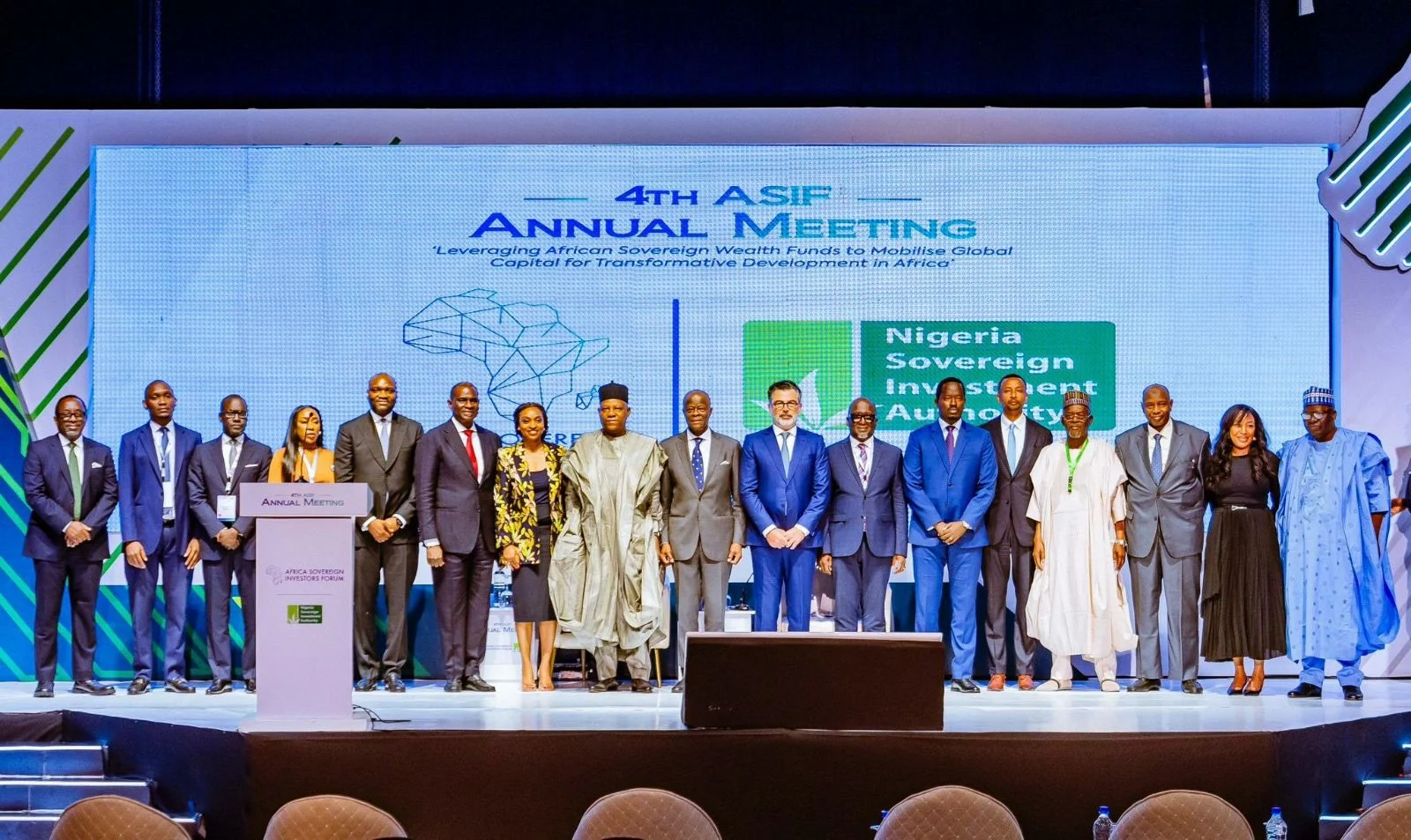
In terms of convergence and the development of intra-African investment, sovereign wealth funds have numerous economic and political incentives to collaborate more frequently, as many projects critical to the continent’s development—particularly in the infrastructure, energy, and industrial corridor sectors—depend on multiple countries. The creation in 2022 of the Africa Sovereign Investors Forum (ASIF), at the initiative of the sovereign wealth funds of Morocco (Ithmar Capital), Angola (FSDEA), Senegal (FONSIS), Nigeria (NSIA), Egypt (TSFE), Gabon (FGIS), South Africa (PIC), Ghana (GIIF), Rwanda (Agaciro), and Djibouti (FSD), is a step in this direction and provides a necessary platform for exchange and collaboration at the continental level [8]. The New African Financial Architecture for Development (NAFAD), recently promoted by the African Development Bank (AfDB), also aims to leverage sovereign wealth funds to ensure better mobilization of African private capital for development projects [9].
With a view to creating competitive value chains, promoting industrialization, and generating jobs, African sovereign wealth funds must invest in strategic sectors of the economy to ensure the self-sufficiency of African economies. Digital infrastructure (cables, data centers, semiconductors) and critical metals are strategic areas where African capital is needed to develop industries and local industry leaders.
Developing investment strategies to acquire stakes in multinational corporations that use African raw materials in their finished products would enable African countries to gain influence in negotiations between suppliers and buyers, benefit from the revenues and dividends paid by these companies, and protect themselves against fluctuations in raw material prices. For example, the Nigerian sovereign wealth fund could invest in the shares of major oil companies; the new Ivorian fund could acquire stakes in Nestlé, Mondelez, or Mars, as well as in the major cocoa traders (Olam, Cargill, etc.); similarly, countries with mining revenues such as Guinea or the DRC could invest in the capital of major mining companies and traders (Glencore, Vitol, Trafigura, etc.). This strategy would allow African countries to generate revenue across the entire value chain. Finally, at a time when country platforms are emerging as new tools enabling countries to mobilize public and private capital to finance their sustainable investments, it is up to African sovereign wealth funds—following the model of the BNDES, which successfully structured Brazil’s 2024 investment program (Brazil Climate and Ecological Transformation Investment Platform – BIP) [10], to use their strategic positioning and experience in structuring international partnerships to ensure leadership in the future development of these roadmaps.
Sources & Bibliography
- [1]“What is a Sovereign Wealth Fund?” IFSWF
- [2]“List of 32 Sovereign Wealth Fund Profiles in Africa”, Sovereign Wealth Funds Institute
- [3]“Sovereign Wealth Funds in Africa: Unlocking Growth, Driving Development, and Attracting Foreign Capital,” Cleary Gottlieb, 2023
- [4]“The Innovative Landscape of African Sovereign Wealth Funds,”Wilson Center, Victoria Barbary, 2025
- [5]“Gemcorp Capital and FSDEA Announce Plans for New Pan-African Infrastructure Fund,”Angola Sovereign Fund, 2025
- [6]“Roundtable discussion on financing the Senegal Green Energy Fund: FONSIS launches an energy transition accelerator,”FONSIS, 2025
- [7]“The Next Frontier of SWFs: How Can SWFs Attract and Retain the Right Capabilities?”, Kearney
- [8]“Angola to Host Africa’s Sovereign Wealth Summit as the Continent Mobilizes Its Own Capital for Structural Transformation,” FSDA, 2026
- [9]“NAFAD: Highlights of a Historic Agreement,” AfDB, 2026
- [10] BIP Brazil
Leave a comment