2063Now | April 2026
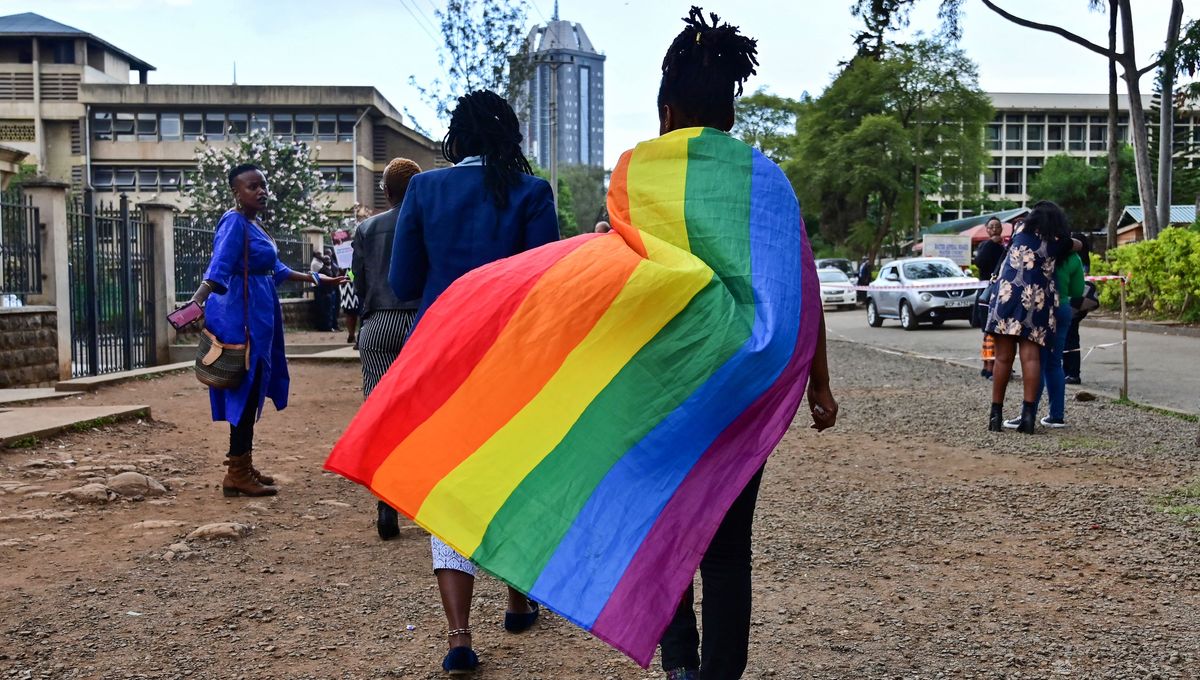
In light of the new laws passed in Burkina Faso (September 2025) and Senegal (March 2026), this opinion piece by 2063Now focuses on the resurgence of the criminalization of homosexuality and LGBTQ+ communities observed in Africa in recent years. This phenomenon appears both as a symptom of growing conservatism within African public opinion and as an expression of political cynicism on the part of many leaders who, to address the socio-economic challenges they face, frame their actions within a narrative of exalting national sovereignty against imperialism and promoting so-called “African” values.
The relative failure to achieve economic prosperity and political pluralism is fueling conservatism among African public opinion
The failure of many African countries to address critical development challenges, more than 60 years after the first wave of independence (poverty reduction, access to energy and healthcare, food self-sufficiency, the fight against corruption, etc.), as well as their difficulty in formulating a strategic vision in the face of various forms of imperialism, have fueled public frustration and fueled political and religious extremism.
Democracy and the rule of law (and, by extension, human rights)—often accused by their critics of contributing to the failures of African nations—are, however, powerful tools for fostering social cohesion and protecting vulnerable populations. Amílcar Cabral argued that concepts such as freedom, peace, and revolution are meaningless if they do not lead to a real improvement in living conditions [1]. Without a thorough reflection on the protection of human rights—particularly those of the most vulnerable—any aspiration toward emancipation or revolution remains incomplete, as it leaves certain groups under the yoke of oppressive and predatory systems. Worse still, the lack of protection for the weakest and most marginalized paves the way for the designation of scapegoats to explain internal crises.
The growing criminalization of LGBTQ+ communities against a backdrop of political and religious radicalization
The African continent is the scene of intense messianic religious competition among different religions and their various branches, all seeking to win over as many followers as possible. The continent’s demographic potential, combined with racist prejudices held by outsiders toward indigenous cultures and religions, has made Africa a prime target for monotheistic religions with universalist ambitions since its earliest interactions with the Western and Arab worlds, and later during the slave trade and colonization.
More recently, after World War II, against the backdrop of the Cold War and following in the footsteps of American televangelist Billy Graham, numerous American churches and private organizations (e.g., the National Prayer Breakfast) have invested heavily in evangelistic tours, the establishment of churches, and the training of young leaders to promote their worldview, particularly on social issues such as the family, homosexuality, sex education, and abortion. NGOs such as Family Watch International have turned certain African countries, such as Uganda, into veritable political laboratories for conservative ideology in order to advance, behind the scenes, the implementation of conservative legislation on these issues. [2]. More recently, Brazilian, Japanese, Korean, and Russian churches have quickly followed this trend, multiplying rapidly across the continent, as have African “megachurches,” while few African governments have fully grasped the scope of this social phenomenon [3].
Similar trends can be observed in the spread of Islam to new regions of the continent (such as Southern and Central Africa) and in the decline of Sufism, which has been replaced by more radical religious approaches in West Africa, supported by humanitarian, exchange, and training programs funded by Turkey and the Gulf states [4].
The spread of these religious discourses over the decades has contributed to the radicalization of public opinion and African civil societies, which were already conservative. The victories of Donald Trump in 2016 and 2024 and of Jair Bolsonaro in 2017, supported by radical evangelical communities, foreshadow a rise in the influence of religion in African political debates, particularly with the promotion of anti-LGBT rhetoric. In November 2025, the African tour (Gabon, Ghana, Democratic Republic of the Congo, Rwanda, Uganda) of Paula White-Cain, an evangelical pastor and spiritual advisor to Donald Trump, marked a new alignment between the objectives of religious movements in Africa and U.S. diplomacy [5]. The U.S. airstrikes in Nigeria in December 2025 to end the “genocide of Christians in Nigeria” (a claim put forward by religious groups but refuted by numerous researchers and experts) also fit into this alignment and reflect the growing influence of religious movements on global geopolitics [6].
Across Africa, many politicians and political activists, in the name of a supposed return to “African values” and the fight against Western imperialism, have made—and will continue to make—LGBT people scapegoats for their countries’ economic and societal problems. This rhetoric, which has long been in the background, has returned to the forefront since the 2010s in response to the legalization of same-sex marriage in many Western countries (France 2013, United States 2015) [7] and against the backdrop of a continental economic slowdown following the end of the commodities supercycle. The growing polarization of the world and the retreat into community-based identities have intensified pressure on LGBT communities worldwide.
A trend toward radicalization on these issues is also evident across the continent, with the exception of a few rare countries such as South Africa, Botswana, and Cape Verde. In December 2023, Burundian President Évariste Ndayishimiye called for homosexuals to be “stoned to death” [8]. In a report published in January 2024, Amnesty International explains how 12 African countries have adopted new laws to systematically target and discriminate against LGBT+ people: Botswana, Burundi, Eswatini, Ghana, Kenya, Malawi, Mozambique, Namibia, Uganda, Tanzania, Zambia, and Zimbabwe [9]. Also in 2024, the Symposium of Episcopal Conferences of Africa and Madagascar (SECAM) opposed the Vatican’s historic decision to authorize the blessing of same-sex couples, citing—somewhat paradoxically—the “cultural ethos of African communities” [10].
It was with this same approach that Burkina Faso, as part of the revision of the Personal and Family Code, introduced in September 2025 the criminalization of same-sex relations as a criminal offense punishable by imprisonment for two to five years and a fine of up to 10 million CFA francs [11]. In Senegal, Parliament has adopted a new law strengthening the criminalization of homosexuality. The new text enacted by the government now includes a prison sentence of 5 to 10 years for so-called unnatural acts, fines ranging from 100,000 to 10 million CFA francs, as well as a ban on the promotion, financing, and support of homosexuality, bisexuality, and transsexuality [12].
All of these statements and measures, which vary in their degree of violence, drive people to commit irreparable acts and fuel an environment of constant suspicion and slanderous accusations used for other purposes. The rise in violent and sordid incidents necessitates compliance with the African Charter on Human and Peoples’ Rights, as well as the establishment of legal frameworks to protect LGBT populations from violence and enable them to assert their right to live in their own countries [13].
A Survey of Laws Prohibiting Same-Sex Relationships in Africa

Source: “Tolerance Still in Short Supply for LGBT Rights in Sub-Saharan Africa,” Control Risk, 2021
Respect for rights and the protection of the most vulnerable groups can form the foundation of national unity
African countries’ aspirations for economic prosperity must not overshadow the crucial importance of the rule of law for the protection of minorities, particularly in contexts that are often multi-ethnic and multi-religious. Furthermore, respect for rights and the protection of the most vulnerable groups can serve as the foundation for national unity in countries that are still too often fragmented by sociocultural disparities.
In a world marked by the redefinition of national identities, this vision can serve as an ideological compass, offering African countries protection against division and chaos. The seamless integration of this approach with “traditional African” values is essential to ensuring the social cohesion necessary for building sustainable and shared prosperity.
The philosophical and humanistic concept of Ubuntu, popularized by Desmond Tutu and Nelson Mandela in South Africa, links individual humanity to collective humanity. Building societies that are unable to guarantee the rights of all, particularly the most vulnerable, would violate this principle and lead to a dead end.
This philosophy can help African countries organize themselves into communities based on solidarity, ready to meet the challenges of the century—challenges that individualism, consumerism, and the “every man for himself” mentality will not allow them to overcome effectively. Ensuring social and civil peace is an essential priority that will enable states to focus fully on their economic and social goals.
Sources & Bibliography
- [1] “Amilcar Cabral – A Collection of Texts with an Introduction by Carlos Lopes,” Centre Europe – Tiers Monde (CETIM), 2013, p. 15
- [2] “Homophobia in Africa: American Influence?” ARTE TV, 2024
- [3]“Rwanda Shuts Down Thousands of Evangelical Churches,” TRT World, 2025
- [4] Süsler B, Alden C. Turkey and African agency: the role of Islam and commercialism in Turkey’s Africa policy. The Journal of Modern African Studies. 2022;60(4):597-617. doi:10.1017/S0022278X22000349
- [5]“African American Evangelicals’ New Offensive in Africa,”Le Monde, Noé Hochet Bodin, November 2025
- [6]“U.S. Airstrikes Were a Limited Option for Nigeria,”Institute for Security Studies, Taiwo Adebayo, 2026
- [7] Same-sex marriage has been recognized in France since May 29, 2013, and in the United States since June 26, 2015
- [8]“Burundi President Stokes Fear Among LGBT People,” Human Rights Watch, Clementine de Montjoye, 2024
- [9]“Africa: A barrage of discriminatory laws fueling hatred against LGBTI people,”Amnesty International, 2024
- [10]“African bishops oppose the blessing of same-sex couples authorized by the pope,”Le Monde with AFP, January 2024
- [11]“Burkina Faso Criminalizes Same-Sex Conduct,”Human Rights Watch, Alex Müller, 2025
- [12]“Senegal Approves Tougher Anti-Gay Law as Rights Groups Raise Concerns,” BBC, Nicolas Négoce
- [13] African (Banjul) Charter on Human and Peoples’ Rights, African Union (1982)
Leave a comment