2063Now | December 2025
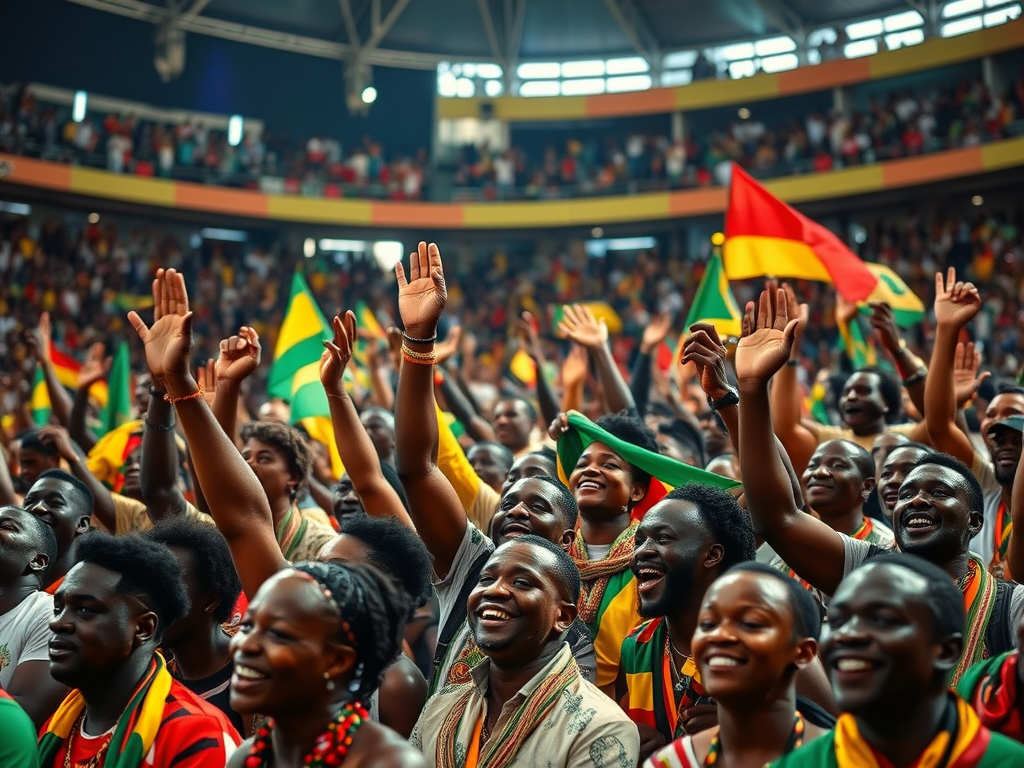
With just a few weeks to go before the start of the Africa Cup of Nations (CAN) in Morocco, Africa's biggest sporting event, 2063Now takes a look at the place of sport in Africa and its potential to become more than just a vehicle for emotions and national or continental unity for a brief moment in time, but a real tool for economic development.
Sport is "the continuation of war by other means," to paraphrase Otto von Clausewitz, and is one area in which African countries seem to be fighting on equal terms with the rest of the world. The continent is a land of champions who have left their mark on the collective imagination, with some going beyond the realm of sport to influence the lives of populations and the destiny of countries.
From Abebe Bikila, the first African Olympic champion at the 1960 Rome Olympics, to the legends who followed in his footsteps: Haile Gebrselassie, Hicham El Guerrouj, Kenenisa Bekele, Tirunesh Dibaba, Faith Kipyegon, Caster Semenya, Letsile Tebogo; athletics has played a prominent role in the rise of African countries to the highest echelons of world sport, dominating many disciplines today.
Soccer, the king of sports, has also brought prestige to African sports. The legendary teams of Cameroon in 1990, Nigeria in 1996, and Ghana in 2010 thrilled Africa and the world. The careers of Belloumi, George Weah, Samuel Eto'o, Didier Drogba, and now Mohamed Salah are an integral part of the great history of soccer.
Other champions have been true pioneers in their disciplines, opening the door to new opportunities for African youth. Hakeem Olajuwon (basketball), Kirsty Coventry (swimming), Ons Jabeur (tennis), Francis Ngannou (MMA), and Biniam Girmay (cycling) have shown that Africans can compete in any sport.
However, all these extraordinary journeys and memorable moments often owe more to the individual resilience of these champions than to institutional planning and support.
Therefore, beyond simply producing champions, but within the framework of a genuine sports policy that takes into account issues of public health and social inclusion, it is interesting to consider the potential that many countries could unlock through institutional planning that promotes economic development, public health, and national unity in African countries.
A glass ceiling shattered quickly after independence
African countries are sporting nations and have made their mark in many major and Olympic disciplines since gaining independence and participating in international competitions for the first time.
Despite their late arrival at the modern Olympic Games, first held in 1896, several African nations rank among the best in the all-time medal standings: Kenya (33rd with 124 medals), South Africa (37th with 95 medals), and Ethiopia (41st with 62 medals) [1]. At the World Athletics Championships, created in 1987, Kenya even ranks second behind the United States, while Ethiopia ranks6th and South Africa22nd [2].
The legends mentioned in the introduction have helped shape the history of African and world sport. They have brought joy to millions of people around the world and proven that all barriers can be broken, demonstrating that African countries are capable of producing great champions and establishing themselves as international sporting powers.
In soccer, Nigeria and Cameroon broke the glass ceiling by winning gold medals at the Olympic Games in 1996 and 2000. In 2022, Morocco became the first African country to reach the semifinals of a World Cup in Qatar. African nations have also won major titles at the youth level. Nigeria is the most successful team in the U17 World Cup with five titles. Ghana in 2009 and Morocco in 2025 have won the U20 category.
Given the current and future demographic potential of African countries, as well as the low level of talent detection and sports infrastructure in many territories, the talent pool remains largely untapped. The best is yet to come if public policies follow suit and fully realize this potential.
Countries have embraced sport as a tool for soft power and economic development.
Over the years, sport has become more than just competition; it has become a tool of soft power, an economic lever, and a vehicle for pop culture.
Since the 20th century, hosting major sporting events has allowed countries and cities to showcase their ambitions in terms of economic development, cultural wealth, and technological innovation to the rest of the world.
Hosting the Olympic Games (summer and winter) and the FIFA World Cup since the end of World War II has been an opportunity, initially for the Eastern and Western blocs to compete against each other, and then, since the 2000s, for emerging powers to announce their newfound strength to the world (Beijing 2008, Sochi 2014, Rio 2016, as well as the World Cups in South Africa 2010, Russia 2018, Qatar 2022, and Saudi Arabia 2034), allowing them to shine a spotlight on their countries to such an extent that "developed" countries are once again keen to host these major sporting events (Paris 2024, Los Angeles 2028).
This ambition on the part of governments reflects more a desire to exercise their "soft power" than to guarantee economic results. Over the past 30 years, economic results have alternated between resounding success (the 2022 World Cup in Qatar [3]) and economic disaster (Athens 2004 [4]). Furthermore, the legacy in terms of infrastructure, often presented as one of the main reasons for hosting by organizers, is sometimes accompanied by human rights or environmental scandals.
However, sport is capable of generating huge revenues while strengthening soft power. Global revenues generated by the sports industry are estimated at $417 billion in 2024 by Kearney [5] (some estimates exceed $1 trillion). The United States, through its four major leagues (National Football League – NFL, National Basketball Association – NBA, National Hockey League – NHL, Major League Baseball – MLB), and England, through the Premier League, have created economic and cultural products for their domestic markets and ensured their international influence through TV rights and merchandising. The American leagues generated nearly $54 billion in 2024 (including $23 billion for the NFL alone), and the world's most watched soccer championship generated nearly $8.5 billion [6] [7].
Beyond event consumption (ticket sales and TV subscriptions), sport is now closely linked to fashion and pop culture. Sportswear, particularly jerseys, has become a fashion item worn every day around the world. Brands have seized on this cultural phenomenon and are competing creatively to offer innovative designs, revisit the classics of the past, and generate revenue. Brazil's iconic yellow jersey has become a wardrobe staple, and NBA jerseys are worn all over the world. In 2018, Nike generated more than $250 million in just a few minutes with millions of orders for Nigeria's jersey, demonstrating interest beyond the continent [8]. Sport has a unique ability to unite and shape culture. African federations should take this into account when negotiating fair contracts with their equipment manufacturers in order to offer products that combine innovation and cultural promotion.
At the African level, the sports economy remains small but is growing. The sports economy in Africa is projected to be worth $5 billion in 2023, or 1% of the global value [9]. The 2023 Africa Cup of Nations in Côte d'Ivoire showed what African countries can do best in terms of organization, sports diplomacy, and nation branding. The competition enabled the Confederation of African Football (CAF) to generate more than $80 million in profit, a record in the history of competitions in Africa [10]. Other African countries have seized on sport as a lever for value creation. Benin is working with the Coton 4+ Group countries to establish a partnership with FIFA for the design of jerseys and equipment made from sourced cotton [11]. Rwanda has been pursuing a strategy of investing in sports competitions and infrastructure for several years. The country has signed a partnership with the NBA to host the African subsidiary of the basketball league, the Basketball Africa League [12], as well as commitments with European football clubs to promote its "Visit Rwanda" country strategy, and will host the World Cycling Championships in 2025 [13]. In the same vein, Morocco will host the 2025 African Cup of Nations and will be the second African country after South Africa to host the World Cup, co-organized with Spain and Portugal. In terms of sports broadcasting, the South African giant Multichoice has long been the African leader thanks to the Supersport group, recently acquired by Canal+ [14].
Structuring sport in a context of limited resources
African countries, in all their diversity, face limited resources and other development priorities. They cannot implement policies as ambitious as those of Saudi Arabia (Vision 2030, Saudi Football Pro League, partnerships with international boxing, Formula 1, MMA, and tennis federations, 2034 World Cup, etc.) or Qatar (Qatar Sports Investments, 2022 World Cup, Aspire, etc.) [15]. However, with pragmatism and speed, many successes implemented by countries around the world and in Africa can be sources of inspiration.
Jamaica is a benchmark in talent identification and training with limited human and financial resources. Despite its population of 2.8 million, the country is a giant in the history of sport, ranking 38th in the all-time Olympic medal table and 6th in the World Athletics Championships. The country specializes in athletics and has established national school competitions, the Jamaica Boys and Girls Championships [16]. This unique system allows for the widespread and early detection of talent (ages 10–14), even in rural and remote areas, and before children leave the school system. This strengthens the structure of school teams at the local level, paving the way for a career in professional sports supervised by clubs and the Jamaican federation, which provides training for local coaches. The Boys & Girls Champs are a true national celebration that goes far beyond sport. The media-covered event mobilizes schools, families, and local communities, creating a strong social and cultural dimension and a framework for Jamaican youth to express their dreams. The event is funded by the state and sponsors, making it a replicable model for many African countries.
Another model is Morocco, which has opted for massive investment in infrastructure and the creation of soccer academies. The Mohammed VI Academy, inaugurated in 2010, is the result of investment by the Moroccan government and private partners. Each year, it selects around 50 young people aged 13 to 18 and offers them intensive football and academic training in order to develop the talents of tomorrow's Moroccan footballers within a sports-study system [17]. The Moroccan federation has also invested in structuring youth championships to ensure the creation of a widespread performance ecosystem and the detection of talent across the country. Morocco's recent semi-final appearance at the 2022 World Cup, victories at the African Nations Championship (CHAN 2025, bringing together players from local leagues) and the Under-20 team's success at the 2025 World Cup are testament to the excellent work carried out by the Moroccan authorities in recent years.
The state academy model can be replicated in other formats by creating partnerships with foreign professional clubs (Génération Foot, Diambars, Académie Armors FC, PSG Academy), philanthropic foundations, and/or universities. In South Africa and Egypt, Olympic culture, university competitions, and youth sections of professional clubs enable the emergence of talent and the performance of these nations at the highest international level in many disciplines.
The creation of compulsory interscholastic sports competitions, specialization in a limited number of sports, support for the development of coaching skills at the local level, partnerships with private companies, the implementation of university scholarships, and systematic monitoring by federations are all solutions for nurturing African talent and creating a culture of performance. Identifying the best talent within the diaspora is also a major area for improvement for African federations.
Enabling every African athlete to shine for their country
This ambition for African sport will only materialize if public authorities rise to the challenge and put an end to predatory attitudes and political interference. Sports ministries must actively combat corruption and sexual violence to enable African athletes to develop in the best possible conditions. Despite the development funds made available by certain international federations, notably FIFA and World Athletics, too many African federations are failing to implement the conditions for sustainable development and infrastructure in their countries. Worse still, some federations are being sanctioned for corruption scandals or political interference, depriving athletes of competitions.
In the absence of decent conditions and institutional support at the international level, many athletes, increasingly younger ones, are choosing to represent foreign countries in order to benefit from better conditions to make a living from their talents. One example is Nigerian sprinter Favour Ofili, who decided to represent Turkey after numerous failures by the Nigerian Athletics Federation at the Tokyo and Paris Olympic Games [19].
By 2050, one in three young people (aged 15-24) worldwide will be African [20]. While this young generation is primarily called upon to transform traditional sectors of the economy (agriculture, industry, services), it can also shine in sport and its industry, and continue to raise the profile of African countries in international competitions. The economic and cultural importance of sport can no longer be ignored, and it is up to African governments to recognize this potential in order to structure the industry and create pathways for elite athletes and all sports-related professions (events, journalism, wellness, administration, sports medicine, etc.). Former athletes with management skills must find the courage to invest in transforming national and African federations to promote performance and showcase African talent. Beyond producing champions, sport must also be seen as a vehicle for public health policies and the well-being of populations.
Sources & References
- [1]“Summer Olympics (1896–2024) Complete ranked medals,” Wikipedia
- [2]“World Athletics Championships All-time Medal table”, Wikipedia
- [3]“FIFA earns record $7.5bn revenue for Qatar World Cup,”Associated Press, 2022
- [4]“Did the 2004 Olympics Spark the Greek Financial Crisis?”, Associated Press, 2010
- [5]“From passion to profit: unlocking value in sports,”Kearney, 2025
- [6]“NFL revenue continues to set records, with a focus on media opt-outs and global growth,”Michael Johnson, S&P Global, 2025
- [7]“European game generated 38 billion euros in 2023-24 season, study shows,”Reuters, 2025
- [8]“Nigerian World Cup jersey sells out after a record 3 million people try to pre-order it from Nike,”Ruth Umoh, CNBC, 2018
- [9]“Africa’s sports industry valued at $5 billion in 2023”
- [10]“Ivory Coast 2023: Most Profitable AFCON In History – Motsepe,”Ayo Bada, Independent Newspaper Nigeria, 2024
- [11]“The steering committee of the Cotton Partnership meets in Benin under the auspices of FIFA and the WTO.”FIFA, 2024.
- [12]“Visit Rwanda x Basketball Africa League,”Visit Rwanda, 2025
- [13]“Organizers hail success, vision of world cycling event in Kigali,”Paul Myers, RFI, 2025
- [14]“SuperSport: Celebrating 30 Years Of Sports Broadcast Revolution,”Broadcast Media Africa, 2025
- [15]“Saudi Arabia’s Vision 2030: Transforming the Kingdom into a Global Sports Hub”
- [16]“Champs – the biggest deal in Jamaica,”World Athletics, 2014
- [17] "CAN 2025: Mohammed VI Academy, breeding ground for future Moroccan champions,"France 24, 2025.
- [18] "FIFA suspends Congo-Brazzaville due to political interference,"Alexis Billebault, Le Monde Afrique, 2025.
- [19]“Olympic sprinter Favour Ofili confirms controversial nationality switch from Nigeria to Turkey,”Colin Udoh, ESPN, 2025
- [20]“As Africa’s Population Crosses 1.5 Billion, The Demographic Window Is Opening; Getting The Dividend Requires More Time And Stronger Effort,”Saurabh Sinha & Melat Getachew, UNECA, 2024
Leave a comment